5 min read
Hypertension, Insulin Resistance, and Metabolic Health
Elite Corporate Medical Services
:
Mar 27, 2026 8:00:00 AM
Table of Contents
Series: Chronic Conditions & Metabolic Health (Part 3 of 3)
What high blood pressure is and why it matters
High blood pressure (hypertension) means the force of blood pushing against your artery walls stays too high over time. Most adults are considered hypertensive at 130/80 mm Hg or above, or if they take medication to lower blood pressure. Left untreated, it quietly damages blood vessels, the heart, kidneys, brain, and eyes.
In the United States, nearly 48% of adults meet criteria for hypertension, and only about one in five have it well controlled, according to recent national data from the National Center for Health Statistics (CDC/NCHS). That means almost half of working-age adults may be carrying a major cardiovascular risk factor without realizing it.
Hypertension rarely exists in isolation. It often travels with obesity, elevated blood sugar, and abnormal cholesterol as part of metabolic syndrome. A common thread underneath these conditions is insulin resistance—when cells stop responding well to insulin, forcing the body to produce more. High insulin levels can make kidneys retain salt and water and activate hormones that raise blood pressure.
For employers and employees alike, uncontrolled blood pressure shows up as more cardiac events, strokes, kidney disease, and time away from work. The flip side is encouraging: improving metabolic health—especially insulin sensitivity—often lowers blood pressure, even before medications are adjusted.
How hypertension connects to obesity, blood sugar, and insulin resistance
Obesity, high blood sugar, and hypertension are not three random problems; they are different faces of the same metabolic story. Extra visceral fat (deep belly fat) releases inflammatory chemicals and free fatty acids that make muscles and the liver less responsive to insulin. The pancreas responds by pumping out more insulin to keep glucose in range.
Chronically high insulin has several blood-pressure-raising effects. It tells the kidneys to hold on to sodium and water, increasing blood volume. It also activates the sympathetic nervous system, which tightens blood vessels and increases heart rate. Over years, this combination stiffens artery walls and keeps readings elevated.
Elevated blood sugar adds its own damage. Glucose acts like a slow-burning irritant on blood vessel linings, making them sticky and promoting plaque buildup. That is why people with type 2 diabetes have higher rates of heart attack and stroke. When obesity and prediabetes coexist with hypertension, the risk compounds.
The hopeful message: when individuals lose even 5–10% of their body weight, improve diet quality, and move more, insulin levels often fall. As insulin resistance improves, kidneys release excess fluid, arteries relax, and blood pressure can come down—sometimes enough to reduce medication needs under medical guidance.
Signs, symptoms, and silent warning flags to watch for
Most people with hypertension feel completely normal. That is why it is called a “silent killer.” The only reliable way to know your status is to measure blood pressure with a validated device in a clinic or at home. Still, a few patterns and symptoms can suggest blood pressure or metabolic strain.
Some people notice frequent headaches, especially at the back of the head, episodes of shortness of breath with exertion, or chest tightness. Others experience ringing in the ears, nosebleeds, or visual changes when pressures are very high. These are not specific to hypertension, but if they appear along with high readings, they warrant prompt evaluation.
More subtle clues often point to the broader metabolic picture. A growing waistline, difficulty losing weight, sugar cravings, dark velvety patches of skin on the neck or underarms (acanthosis nigricans), and fasting blood sugar creeping into the prediabetes range are classic signs of insulin resistance. When these cluster with even mildly elevated blood pressure (for example, repeated readings in the 130s/80s), it suggests the whole system is under strain.
Because nearly half of U.S. adults have hypertension and about one-third have prediabetes, regular screening at primary care visits and workplace clinics is critical. Cuff readings, basic lab work, and a review of symptoms together create a clearer picture than any single number alone.
Everyday habits that lower blood pressure and insulin levels
Lifestyle changes do not have to be extreme to matter. Small, consistent shifts in how you eat, move, sleep, and manage stress can improve both blood pressure and insulin resistance at the same time. Think of these as daily levers you can pull in your favor.
From a nutrition standpoint, an eating pattern rich in vegetables, fruit, beans, nuts, fish, and unsalted seeds tends to lower blood pressure and improve metabolic health. Limiting added sugars, white bread, white rice, and heavily processed snacks reduces blood sugar spikes and insulin demand. Cutting back on sodium—especially from packaged foods and restaurant meals—helps many people lower systolic pressure by 5–10 points over time.
Movement is equally powerful. Aim for at least 150 minutes per week of moderate activity, such as brisk walking, cycling, or swimming, plus two sessions of resistance training. Even a 10-minute walk after meals can blunt blood sugar peaks and gently lower blood pressure. Over time, stronger muscles act as a “sink” for glucose, improving insulin sensitivity throughout the day.
Finally, prioritize 7–8 hours of quality sleep and build in simple stress-reduction practices, such as brief breathing exercises, stretching, or short walks during the workday. Poor sleep and chronic stress both push blood pressure and insulin higher, even when diet and exercise are on track.
When medications and medical follow-up are essential
For many people, lifestyle steps alone are not enough to safely control hypertension—especially if readings are significantly above 140/90 mm Hg or if there is a history of heart disease, stroke, or kidney problems. In these cases, medications are not a failure; they are protective tools.
Common blood pressure medications include diuretics (which help the body release extra fluid), ACE inhibitors and ARBs (which relax blood vessels and protect the kidneys), calcium channel blockers, and beta blockers. Your clinician may use one or a combination, depending on your overall risk profile, lab results, and how your body responds.
In individuals with insulin resistance, prediabetes, or type 2 diabetes, medicines such as metformin or newer GLP‑1–based therapies may be considered to improve blood sugar and support weight loss. As insulin resistance improves, blood pressure often follows—which is why a comprehensive care plan looks at all these factors together rather than treating each in isolation.
Regular follow-up is key. That includes checking blood pressure at home, reviewing readings with a clinician, monitoring kidney function and electrolytes, and adjusting medications carefully. Never stop or change a prescribed medication without medical guidance, even if home readings start to improve.
How workplace clinics and preventive programs can help
For working adults, access and convenience often determine whether high blood pressure and metabolic risks are caught early or missed for years. Employer-sponsored onsite and near-site clinics, as well as mobile screening events, can close that gap.
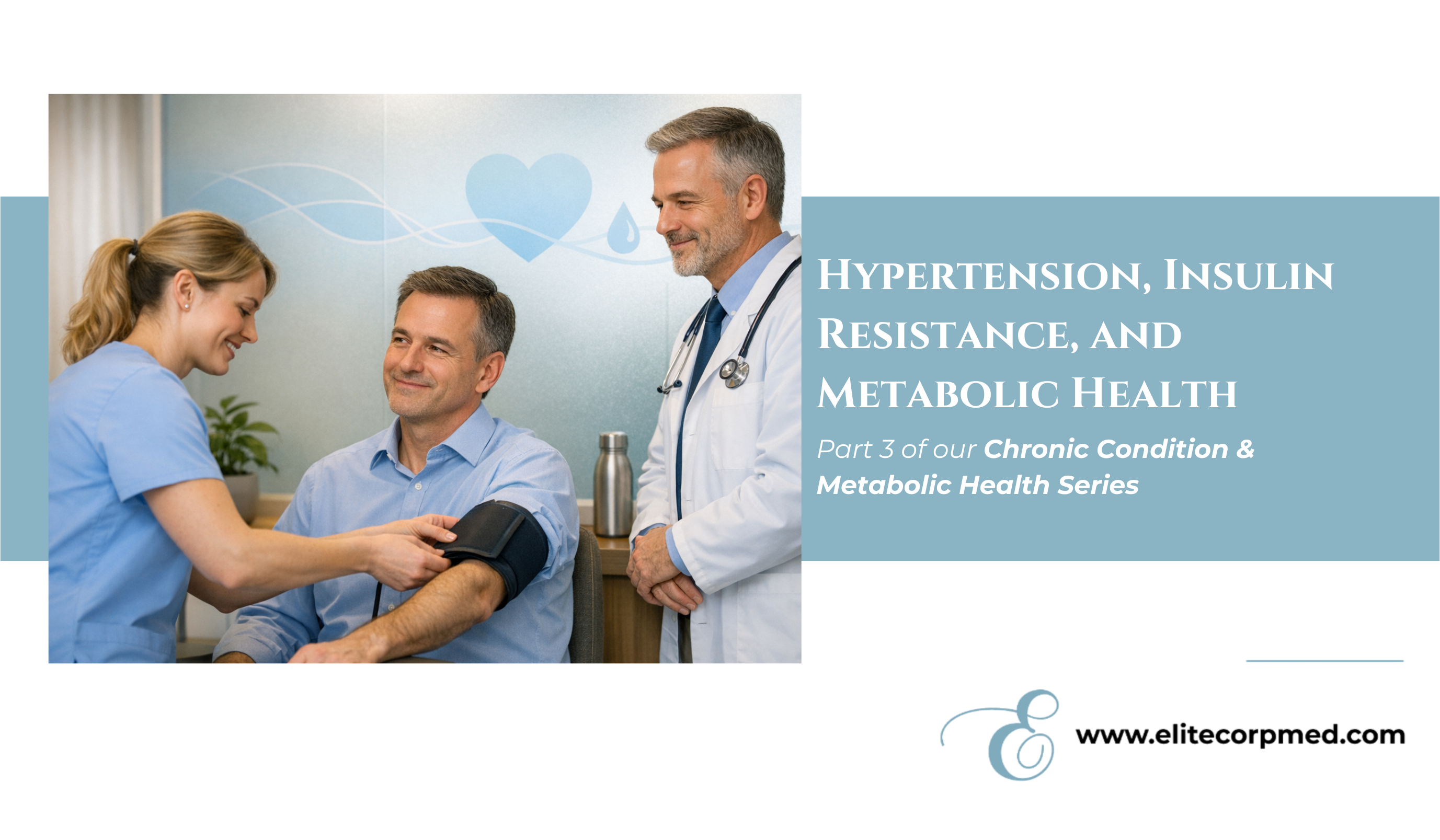
At a well-designed workplace clinic, employees can obtain blood pressure checks, biometric screenings, A1C measurements, and coaching in one visit, often without taking significant time off. Clinicians can identify patterns—such as rising blood pressure alongside weight gain and borderline glucose—and start a personalized plan before a crisis occurs.
These programs are most effective when they combine clinical care with practical support: nutrition counseling tailored to work schedules, activity plans that fit fitness levels, medication reviews, and clear follow-up. For employers and brokers, the payoff includes fewer emergency room visits for hypertensive crises, better control of chronic conditions, and a healthier, more productive workforce over time.
Putting it all together: your next best step
Hypertension, obesity, and elevated blood sugar share a common engine in insulin resistance. The more that engine revs unchecked, the higher the risk of heart attack, stroke, kidney disease, and lost quality of life. The good news is that you do not have to fix everything at once to start turning the tide.
Begin by knowing your numbers: blood pressure, waist circumference, fasting glucose or A1C, and cholesterol. Use that information with a trusted clinician to create a realistic plan that fits your life—one that blends nutrition changes, movement, sleep, stress management, and, when needed, medication.
Call to Action: If your organization offers an onsite or near-site clinic, consider scheduling a blood pressure and metabolic health check in the next month. If not, ask your benefits team or broker about convenient options for screenings and preventive care that reduce time away from work.
Educational Disclaimer: This article is for general educational purposes only and is not a substitute for professional medical advice, diagnosis, or treatment. Always consult a qualified healthcare provider with questions about your personal health or before making changes to your medications, diet, or exercise routine.